Click any image to enlarge. Use ← → or close with Esc.
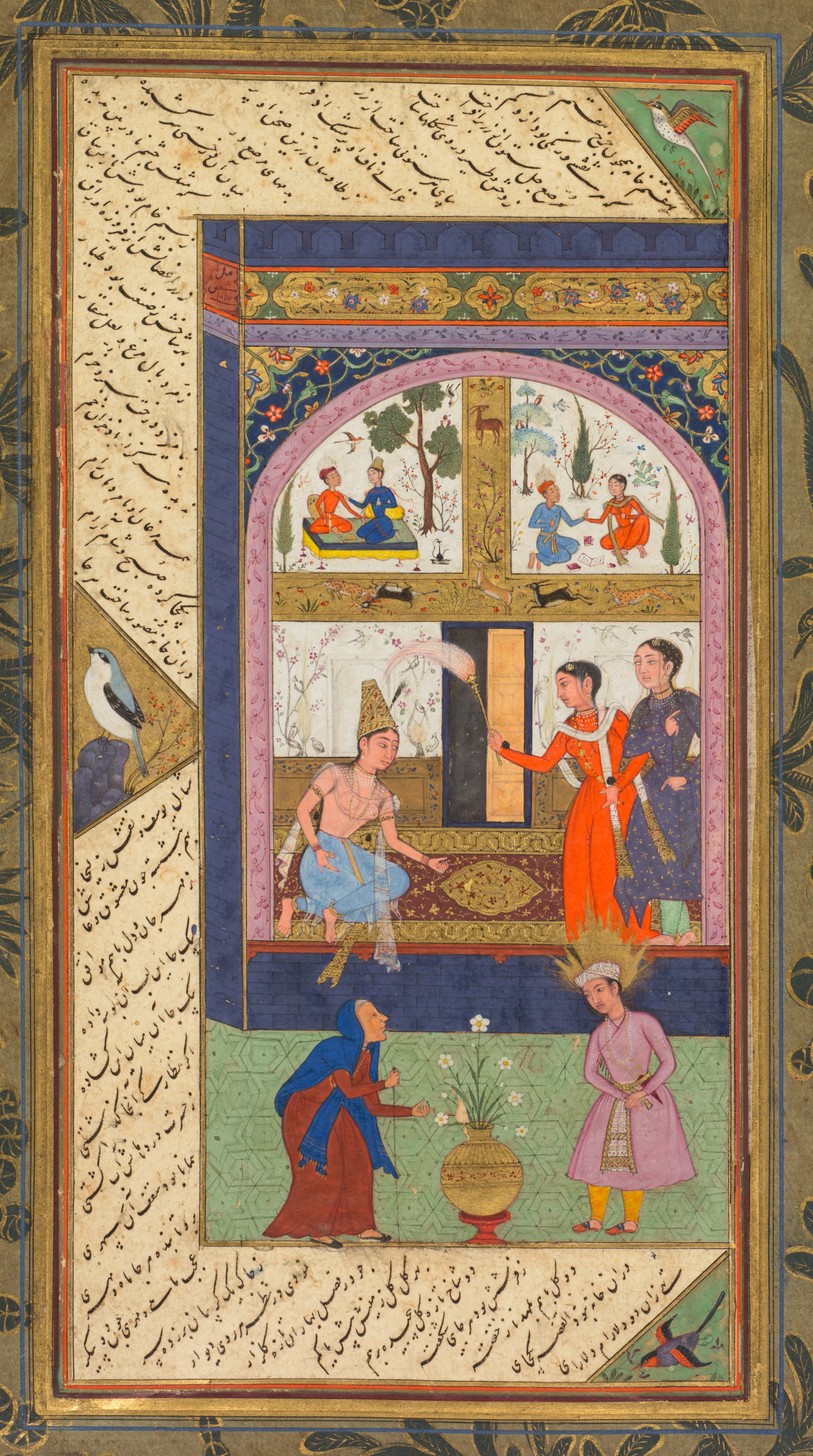
Page from the Panj Ganj (Five Treasures) of Abd al-Rahman Jami (Persian, 1414–1492), with two Persian masnavis (narrative poems): Yusuf va Zulaykha (Joseph and Zulaykha) and Subhat al-abrar (Rosary of the Righteous)
Northern India, Mughal, early 17th century · Text c. 1500–1520; painting, borders, and illuminations added 1603–7 Text copied by Sultan-Ali Mashhadi (Persian, active early 1500s) for Badi al-Zaman Mirza, ruler of Herat Painted insets and borders by Mushfiq (Indian, active 1580s–early 1600s) Text copied in Herat Painting, borders, and illuminations made in the Deccan for Mughal minister Abd al-Rahim the Khan Khanan · Gum tempera, ink, and gold on paper
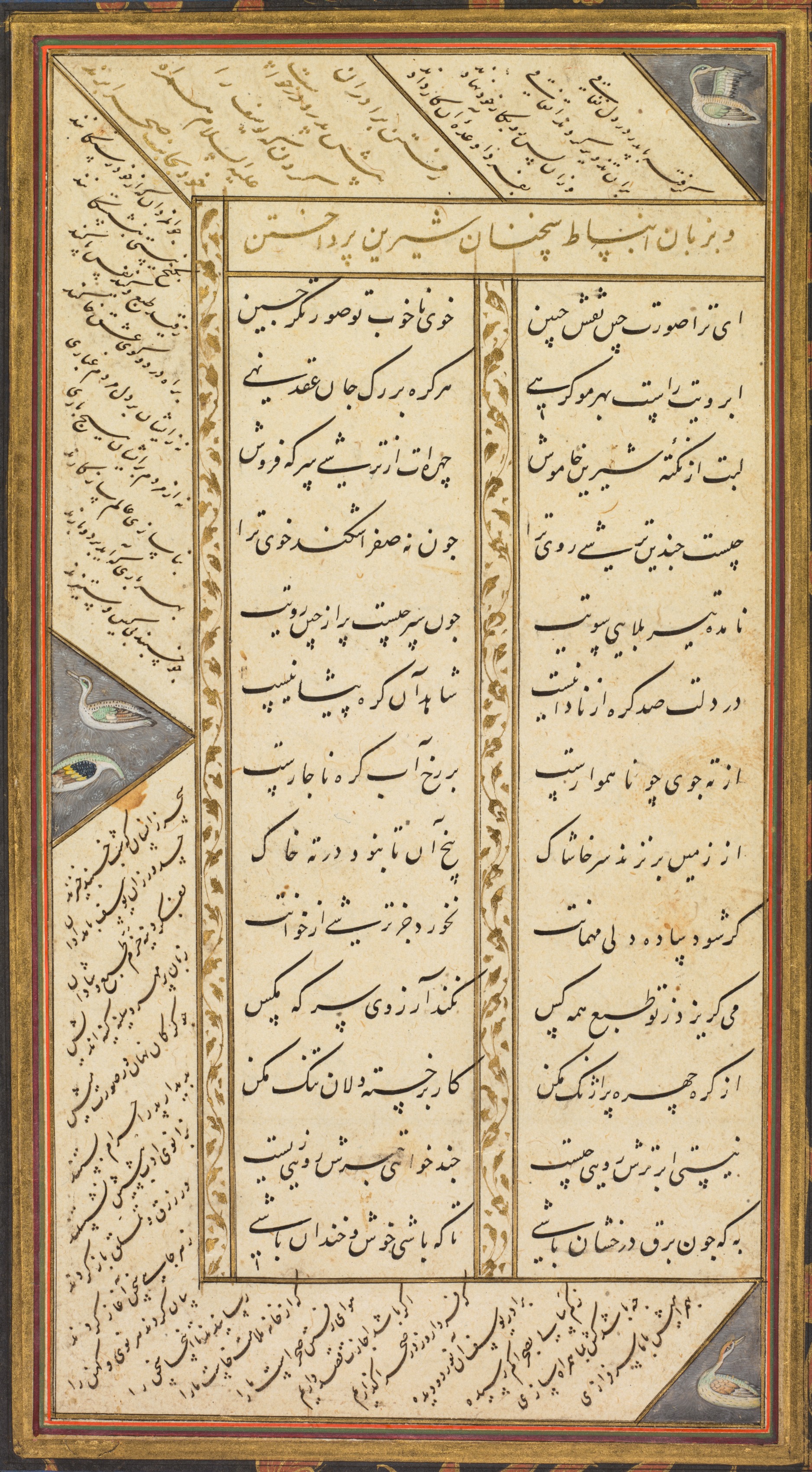
Page from a Panj Ganj (Five Treasures) of Abd al-Rahman Jami (Persian, 1414–1492), with two Persian
masnavis: Yusuf va Zulaykha (Joseph and Zulaykha) and Subhat al-abrar (Rosary of the Righteous) (verso)
Page from a Panj Ganj (Five Treasures) of Abd al-Rahman Jami (Persian, 1414–1492), with two Persian masnavis: Yusuf va Zulaykha (Joseph and Zulaykha) and Subhat al-abrar (Rosary of the Righteous) (verso)
Northern India, Mughal, early 17th century · 1520–1607 · Gum tempera, ink, and gold on paper
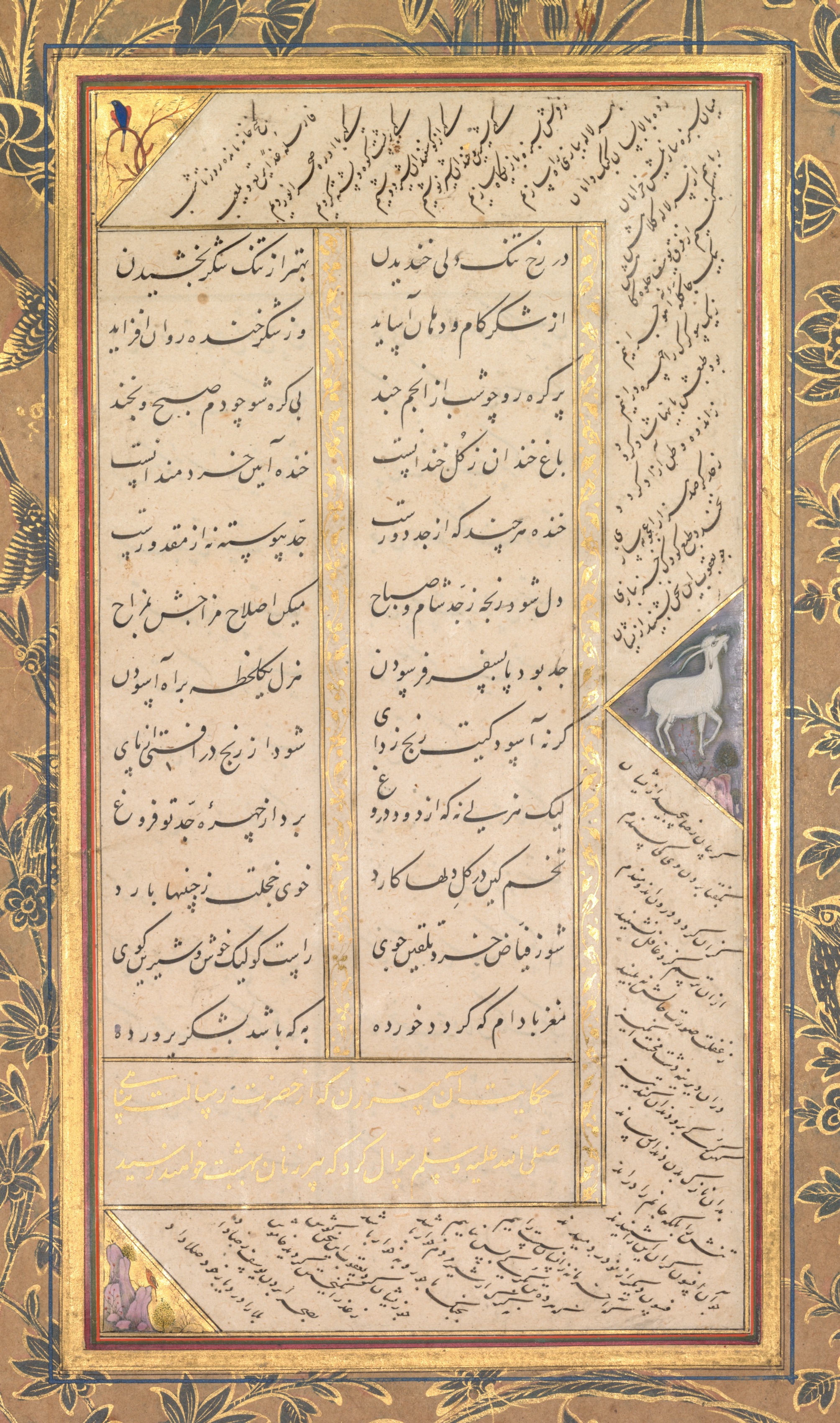
Folio B: Folio from the
Folio B: Folio from the "Five Treasures" (Panj Ganj) of Jami (recto)
Northern India, Mughal, early 17th century · 1520–1607 · Gum tempera, ink, and gold on paper
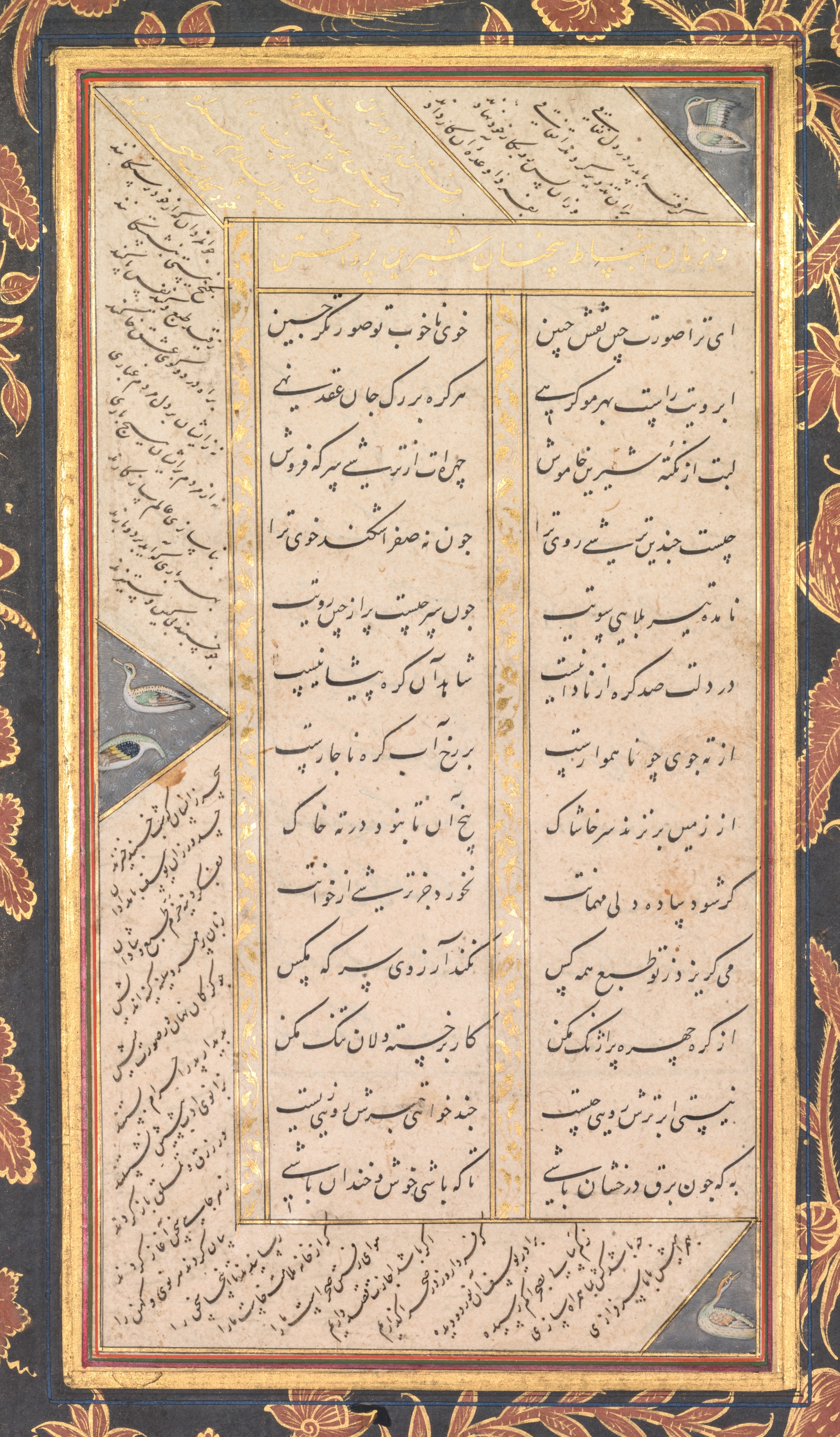
Zulaykha in her palace and as an old woman with Joseph, from a Panj Ganj (Five Treasures) of Abd al-Rahman Jami (Persian, 1414–1492); verso from a Panj Ganj of Abd al-Rahman Jami (Persian, 1414–1492), with two masnavis: Yusuf va Zulaykha (Joseph and Zulaykha) and Khirad-nama-i Iskandari (Alexander’s Book of Wisdom)
Western Afghanistan, Herat (text); Mughal India (paintings) · Text copied by Sultan-Ali Mashhadi (Persian, 1453–1520) for Badi al-Zaman Mirza of Herat Painting, borders, and illumination by Mushfiq (Indian, active 1580s–early 1600s); Text copied in Herat; Painting, borders, and illuminations made in the Deccan for Mughal minister Abd al-Rahim the Khan Khanan · Gum tempera, ink, and gold on paper